For the first time, ICAF will be hosted in Europe at Napier University in Edinburgh in late May 2027.
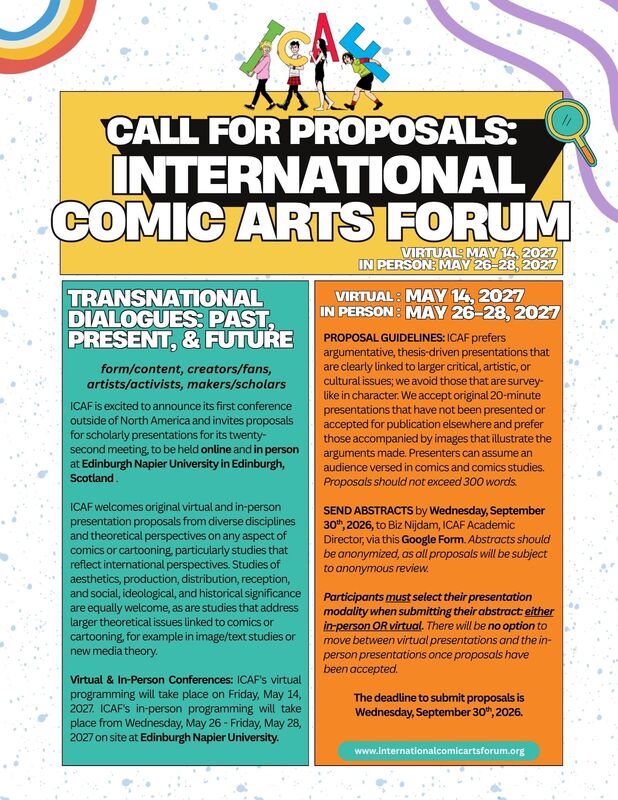
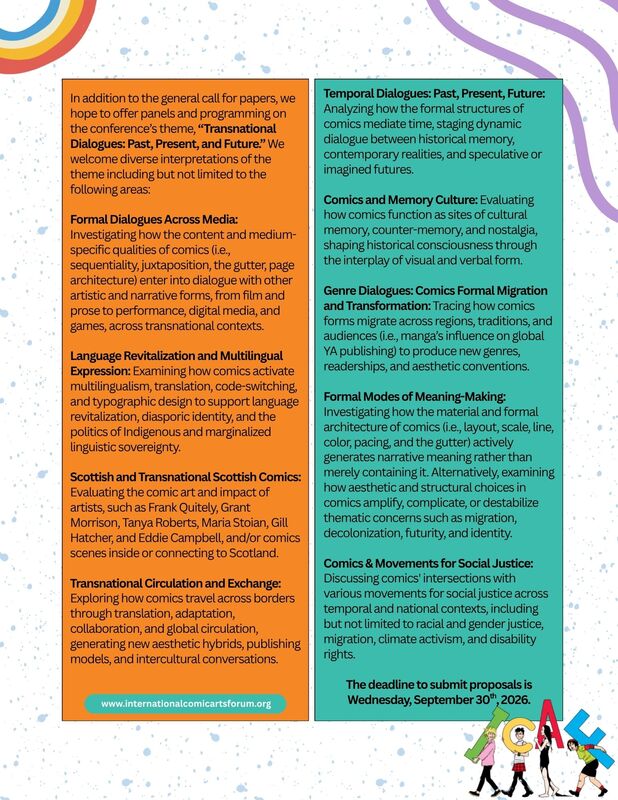
Read more about it and submit proposals here no later than September 30th. http://www.internationalcomicartsforum.org/2027-cfp.html
 Malmö University Comics Hub
 For the first time, ICAF will be hosted in Europe at Napier University in Edinburgh in late May 2027.
Read more about it and submit proposals here no later than September 30th. http://www.internationalcomicartsforum.org/2027-cfp.html
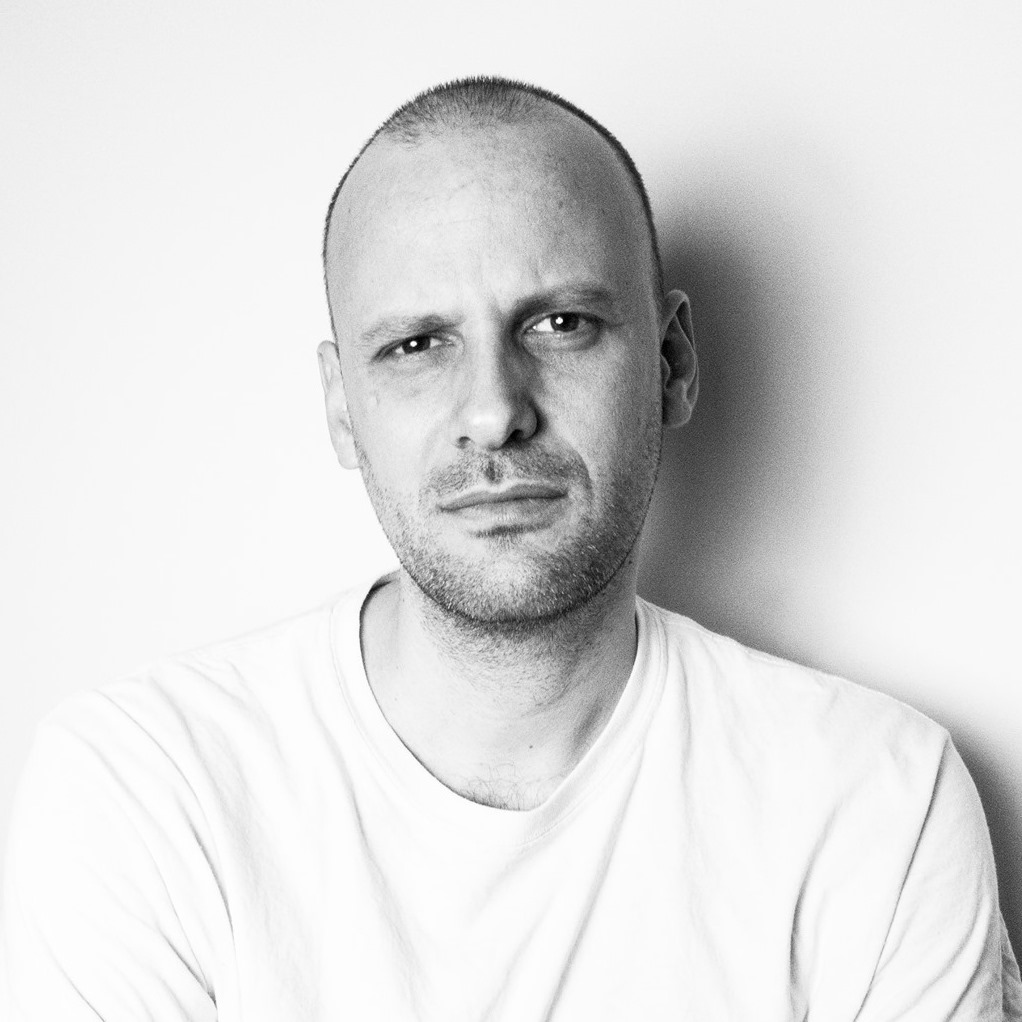
We are happy to announce that Dr. Ilan Manouach, postdoctoral fellow FNRS at ULiège, affiliate Metalab at Harvard, affiliate Labo Paragraphe at Paris 8 and visiting professor at the University of Uppsala will present a keynote at the 4th International Comics Research Conference at Malmö University (12) 13–14 November 2026.
What Comics Know
What if comics were never really about drawing? What if the medium’s deepest infrastructure — sequential frames, spatial juxtaposition, the gap between panels where cognition fills in what isn’t shown — was always a knowledge technology waiting for machines to notice? Digitization didn’t disrupt comics. It revealed what was already there: a graphic system for organizing, encoding, and transmitting knowledge that operates independently of any single reader’s comprehension. Comics are now legible to software. They function as structured repositories — not of stories, but of relational data, semantic connections, reasoning architectures. As artistic research, this is where comics get interesting: not when artists express themselves through the medium, but when the medium’s computational logic outpaces the people who make it. The artist becomes a designer of epistemic conditions, not a maker of images. This talk draws on ongoing research into comics as computational objects — including work with the Semantic Web, web ontologies, and synthetic comic production — to map what a post-authorial artistic research in comics actually looks like. It asks what comics know that we don’t, and whether we need to.
Bio
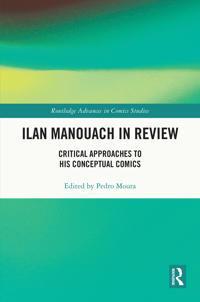
Ilan Manouach (1980) is a comics artist and a postdoctoral scholar on Computational Creativity at the University of Liège. He is also an affiliate scholar at Harvard metaLAB and an affiliate researcher at Paris VIII with Labo Paragraph. He is the author of over 30 comic books and the editor of Chimeras. Inventory of Synthetic Cognition, a collective glossary on AI, with 150 contributors exploring a variety of epistemic perspectives on artificial intelligence: interspecies, crip, monstrous, feminist, distributed, and decolonial, among others. He is an appointed expert on the comic book industry to the Belgian government and worked as a strategy consultant for the Onassis Foundation. He is the founder of Echo Chamber a non-profit organization dedicated to comics research (part of the Creative Europe consortium of Expanded publishing), and the founder of Topovoros Books, a Greek publishing house spearheading translations of cornerstone essays in humanities. He is the creator of Shapereader (2014-), a system of tactile comics for people with visual disabilities and the co-creator of the first algorithmic cartoon generator, The Neural Yorker (2019-2023). The critical anthology Ilan Manouach in Review, Critical Approaches to his Conceptual Comics published by Routledge is dedicated to analyzing his artistic work (currently being translated into French by Presses Universitaires de Liège). His latest books are Tarwar (NERO, 2025) — a conceptual comic book entirely composed of original black panels from international comic book — and Out Side (JBE Books).
CALL FOR PAPERS
Inaugural Graphic Medicine Europe Conference X Cross Comix
9-12 September 2026
Vrije Universiteit Amsterdam & De Doelen Rotterdam
We are pleased to announce the inaugural conference of Graphic Medicine Europe, an independent research organization dedicated to the study and practice of Graphic Medicine. For our inaugural conference we are happy to be partnering with Cross Comix, a pioneering Rotterdam-based comics organization that builds bridges between comics, other art disciplines, and social issues locally, nationally, and internationally. Together we are organizing an exciting program of keynote lectures, workshops, artist talks, and other events at the Vrije Universiteit Amsterdam and at the 10th annual Cross Comix festival at De Doelen in Rotterdam, including:
• Ian Williams, keynote lecture
• Ana Patrícia Hilario, keynote lecture
• Eszter Szép, comics brewery
• John Miers and Erin La Cour, Why Graphic Medicine? book launch
• Sabba Khan, artist talk
• Octavia Roodt, artist talk
• Graphic Medicine Exhibition
• Makers Market
• …and much more!
For the more academically focused part of the conference, from 9-10 September at the Vrije Universiteit Amsterdam, we welcome paper and panel proposals that deal with our themes of IMAGINATION, MEDIATION, & MANIFESTATION, whether within, in-between, or across disciplines, practices, and professions.
Read more about our call for papers, panels, workshops, and also about the makers market and zine kiosk at our website. Link in the first comment.
Apply by 30 April 2026.

– international conference in comics & visual studies
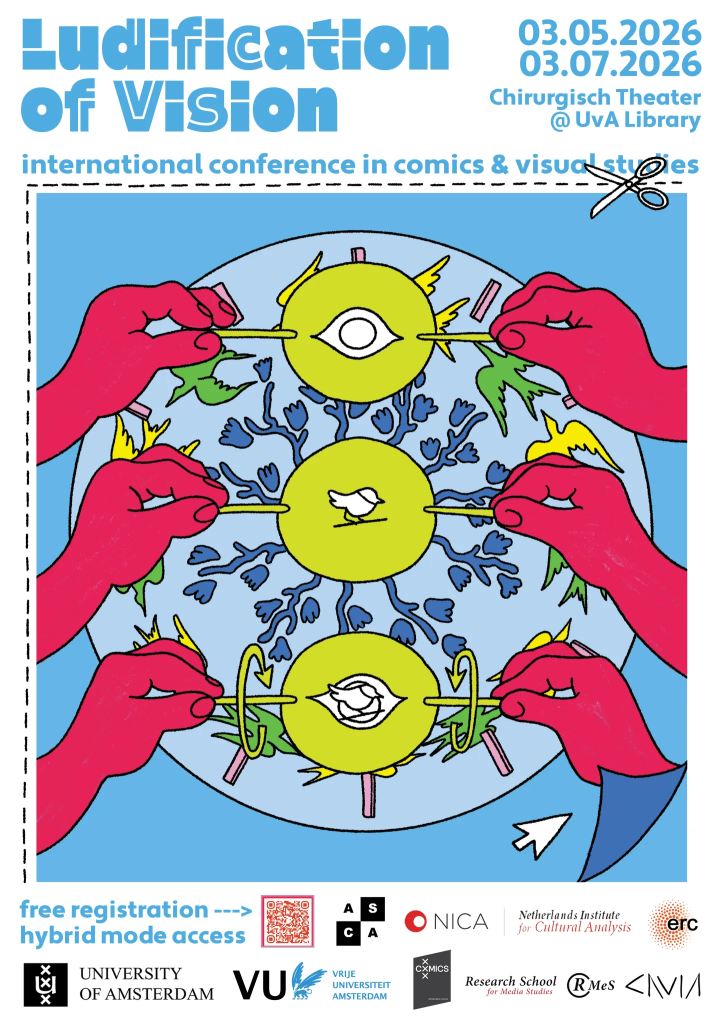
At the junction of comics and visual studies, this international conference aims to understand how popular media art contributed to the ludification of vision, training our eyes to see in playful, nonlinear and equivocal ways.
ORGANIZING COMMITTEE
Mathieu Li-Goyette (UvA), Erin La Cour (VU), Toni Pape (UvA), and Rik Spanjers (UvA)
CREDITS
Poster | Romy Surprenant
Volunteers | Teddie Meijer, Ananya Sambasivan, and Annie Wang
PARTNERSHIPS & SPONSORS
Amsterdam Comics
Amsterdam School of Cultural Analysis (ASCA)
The European Research Council (ERC)
Filmhuis Cavia
Netherlands Institute for Cultural Analysis (NICA)
Research School for Media Studies (RMeS)
Vrije Universiteit Amsterdam
Universiteit van Amsterdam
The 4th International Comics Conference at Malmö University (12) 13–14 November 2026 Deadline: 15 April 2026, Notification of acceptance: no later than 30 April 2026.
Confirmed keynote speaker: We are happy to announce that Ilan Manouach will give a keynote at the conference called ”What Comics Know” about Computational Artistic Research in comics.
How is narrative constructed and negotiated through the material forms and practices of comics? Building on Malmö University’s strong focus on storytelling and comics research this conference invites scholars, practitioners, and reflective creators to explore what it means to craft narratives that participate in the construction of social, political, or emotional realities. How do storytelling strategies in comics (sequencing, stylisation, visual rhythm) interact with material choices, identity, and imagination?
Possible questions include (but are not limited to):How can the tactile and physical engagement with comics as objects foster a unique sensory, emotional, and intimate connection between reader and creator?
•How do reader interpretations, participatory practices, fan engagements or living narrativesshape the storytelling in comics?
•What responsibilities do comics creators hold when representing contested histories, identities,or traumas?
•How do the material forms of comics differ across cultural contexts, and what can thesedifferences teach us about diverse storytelling traditions?
•What ritualistic or performative elements emerge in the making, reading, or sharing of comics?
•How can we preserve the material legacies of comics for future inquiry, ensuring that thephysical dimensions of the medium remain accessible for analysis and inspiration?
•In what ways do the stories we, as researchers, tell about the pioneers or ”the most influential”creators shape the discourse of comics studies? How do these academic narratives influence thefuture of the comics medium itself?
In line with the current public discourse, we also encourage reflections on canon formation, not only in academic discourse but also in publishing, teaching, curation, and practice. What comics do we preserve, study, translate, or showcase, and what falls through the cracks?
Submissions may take the form of academic papers, practice-based presentations, or hybrid formats. The first day (12 November) will serve as a pre-conference day in collaboration with the Comics Archive in Malmö, offering participants the opportunity to visit the archive and/or engage in focused research on specific materials. Pre-registration is required for this day.
Abstracts (max 300 words) and a short bio (max 100 words) should be submitted by 15 April 2026. Notification of acceptance will be sent out by 30 April 2026.The conference will be held on-site at Malmö University, Sweden. Further details including keynote speakers, registration, and programme will be announced during the summer of 2026.Contact: oskar.aspman@mau.se

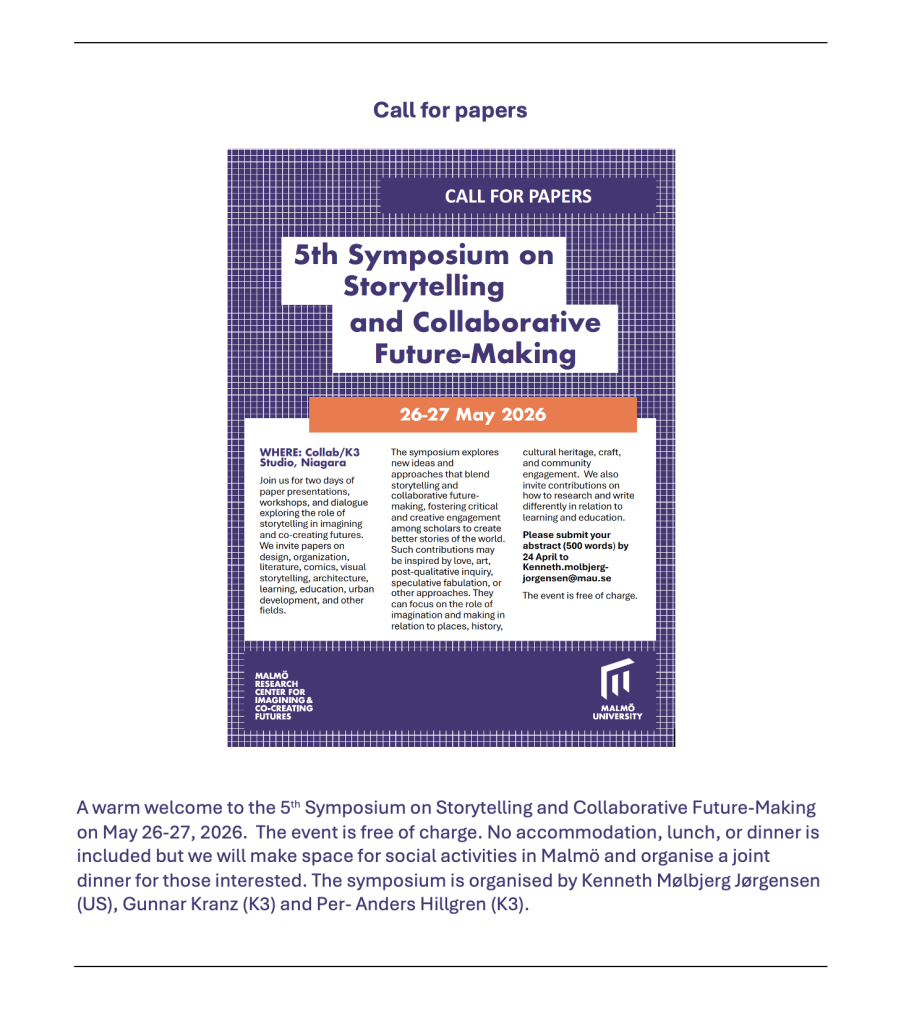
The Centre for Imagining and Co-Creating Futures hereby invites you to the 5th symposium at Malmö University, on the theme of storytelling and collaborative future-making. The symposium takes place 26-27 May 2026. We plan to construct a varied program with paper presentations, workshops, and spaces for dialogue. A common thread of the symposium is the exploration of storytelling’s role in imagining and co-creating futures. We invite papers on design, organization, literature, comics, visual storytelling, architecture, learning, education, urban development, and other fields.
The symposium explores new ideas and approaches that blend storytelling and collaborative future-making, fostering critical and creative engagement among scholars to create better stories of the world. Such contributions may be inspired by love, art, post-qualitative inquiry, peculative fabulation, or others. They can focus on the role of imagination and making in relation to places, history, cultural heritage, craft, and community engagement. We also invite
contributions on how to research and write differently in relation to learning and education.
If you want to join us, please submit an abstract of approximately 500 words by 24 April 2026 to one of the organizers, Kenneth Mølbjerg Jørgensen, Gunnar Krantz, or Per-Anders Hillgren.
The event is free of charge. We don’t offer any accommodation, lunch, or dinner. We will make space for social arrangements in Malmö and organize a joint meeting place for dinner for those
who are interested. Please send any queries to Kenneth, Gunnar, or Per-Anders using the following emails. The venue for the symposium will be announced later.
Best, Kenneth, Gunnar, and Per-Anders
Kenneth.molbjerg-jorgensen@mau.se
per-anders.hillgren@mau.se
gunnar.krantz@mau.se
Call for papers at the
Royal Institute of Technology in Stockholm
& Uppsala University, 22-23 April, 2026
Steering committee:
Jan Baetens, Jaqueline Berndt, Jan von Bonsdorff, Gareth Brookes, Benoît Crucifix, Björn-Olav Dozo, Anna Foka, Isabelle Gribomont, Andre Holzapfel, Per Israelson, Gaëtan Le Coarer, Ilan Manouach, Pedro Moura, Everardo Reyes, Keith Tillford, Ray Whitcher
Today, the field of comics is undergoing a profound transformation marked by a growing heterogeneity of forms, formats, and production processes. From synthetic comics, operational images, data-driven visualization to embodied, non-visual comics, comics are expanding beyond the conceptual and historical frameworks that have traditionally defined it. Existing models in research— grounded in the artisanal craft traditions, narratology, text-image correlation, and human-centered authorship— are struggling to account for this rapidly diversifying landscape. Craft-based approaches might appear resistant or inadequate in the face of new technological practices that recombine production, circulation, and reception through computational logics.The current moment compels a broader redefinition of comics as fundamentally technical objects. The boundaries that once separated comics from technical and operational systems are dissolving. To grasp the full scope of these developments, we must account for comics as sites where technological processes are not external influences but internal engines — where creation is entangled with computation, standardization, and new modes of mediation. As computational processes— from machine learning to synthetic image generation and communication systems powered by computer vision— increasingly shape the creation, distribution, and experience of comics, it is no longer sufficient to understand the medium solely through the lenses of narrative, visual storytelling, or artisanal craft. Recognizing comics as engineered configurations of information, relational diagrams, and experimental knowledge structures is not a speculative gesture; it is a necessary step for understanding the profound transformation underway in the medium’s ontology, practice, and future potential.
Within this expanded computational landscape, comics increasingly function as sites of artistic research— experimental configurations that generate knowledge through making rather than merely representing it. As comics engage with computational systems, they become laboratories for investigating the material conditions of contemporary media production. These research-oriented practices extend beyond traditional academic boundaries. Rather than simply illustrating research findings, comics-as-research deploys their unique capacity for relational thinking— the medium’s inherent ability to orchestrate temporal, spatial, and conceptual relationships — to investigate how technical systems reshape creative labor, audience relations, and the very possibility of narrative meaning. This artistic research dimension positions comics not as objects of study but as active investigative tools, capable of generating insights about computational culture that emerge specifically through the medium’s hybrid technical-aesthetic operations.
We are pleased to announce a two-day international conference on April 22-23, 2026 at the Royal Institute of Technology in Stockholm and at Uppsala University dedicated to examining the rapidly evolving landscape of comics. Rather than framing this transformation solely as a rupture, the conference seeks to situate it within a longer history of computational rationality— a lineage in which the medium has continuously negotiated the demands of efficiency, scalability, and technical constraint. Our aim is to critically rethink comics not as passive recipients of technological change, but as active computational configurations: media fundamentally entangled with systems of automation, standardization, and information processing.
We welcome submissions addressing the following areas (among others):
Histories of automation and engineering in comics production and distribution
Transformations in formats and workflows driven by technological change
Comics as data: informatization, discretization, and database design
Human-machine collaborations in past, present, and speculative comics practice
Audience and user labor in automated platforms and circulation systems
Data-mining and recirculation techniques in digital comics ecologies
Machine subjectivities: authorship, intention, and expression in machinic agents
Computational archiving practices: scraping, clustering, and vectorization
Speculative and critical practices addressing automation and machinic mediation
Industrial logics in comics: international and comparative perspectives
Resistance to automation: sabotage, slow media, and disobedient design
Operational aesthetics: the visual and affective languages of automation
Speculative histories and alternative futures of comics as technical media
Comics as simulations: diagrams, blueprints, and procedural environments
Comics as artistic research methodologies: practice-based inquiry and knowledge production where comics are used to interrogate emerging technologies and social systems
We invite submissions for the following presentation formats:
Research Papers (20 minutes + 10 minutes discussion): Traditional academic presentations suitable for theoretical, historical, or analytical work
Practice-Based Presentations (15 minutes + 15 minutes discussion): Presentations by creators, artists, and practitioners demonstrating work and reflecting on process
Interactive Demonstrations (30 minutes): Hands-on sessions showcasing new tools, platforms, or methodologies
Panel Discussions (90 minutes): Collaborative sessions bringing together multiple perspectives on specific themes
Lightning Talks (5 minutes): Brief presentations ideal for work-in-progress, provocations, or preliminary findings
Workshop Sessions (3 hours): Extended collaborative sessions for skill-sharing and collective exploration of tools and methods
Abstract length : 250 words
Short bio: 150 words
Deadline for abstracts: 1st December 2025
Notifications of acceptance: 30th December 2025
Send to conference@echochamber.be
The starting point for the Everyday Comic-Art Network and a release for the presentation of the comic-art based project: Det är i vardagen det händer – Tecknade serier för att skapa tryggare grannskap (It happens in the everyday – Comic-art to create safer neighborhoods).
9 Dec 2025. 09:00 – 16:00
Location: Glashuset, HDK-Valand. Entrence Storgatan 43 or Vasagatan 50, Göteborg
Additional info. Zoom link is provided.
Read more here: https://www.gu.se/en/event/everyday-comic-art-network
CALL FOR PAPERS
LUDIFICATIONS OF VISION
University of Amsterdam – March 5-7, 2026
Organizers: Mathieu Li-Goyette, Erin La Cour, Toni Pape, Rik Spanjers
At the turn of the 20th century, techniques of observation and of visual representation were achieving an exponentially fast industrial revolution of production, distribution, and reception. Presses and cameras were faster, more precise, and as their influence on society rapidly broadened, a whole new set of visual practices became available to artists. Since then, vision has become fully fragmented or accelerated, with the collapse of “classical models of vision and their stable space of representations. Instead, observation [became] increasingly a question of equivalent sensations and stimuli that have no reference to a spatial location” (Crary 1990). These advancements encouraged a perpetual deconstruction of vision prompting new techniques of representation, which are still ongoing in our technological age.
During this period, print and visual media developed new modes of combining words and images that both dynamize vision and normalize it in new directions. This results in media forms that playfully engage the eye in nonlinear visual explorations, forms that are implicitly forces of deinstitutionalization of subjects, framing, and usages. Examples can be found in comic strips and magazines, but also advertisements, games, miniatures, puzzles, rebus, travelogues and visual bibles.
This conference invites an intermedial reflection on the development of modes of reading and seeing in relation to constraints of production and distribution. We welcome contributions on subjects ranging from a medium’s early stages of development up to the present digital world, while addressing issues of readability, narrativity, interactivity, and/or materiality. How did new ludic modes of seeing develop from scientific observation to artistic production? What techniques did artists develop to increase the readability of their medium? How did they negotiate the tensions between originality and standardization? What new visual norms were established along the way?
Bringing together scholars and practitioners, the conference aims to understand how popular media art contributed to the ludification of vision, training our eyes to see in playful, nonlinear and equivocal ways.
We welcome submissions on any aspect of ludification in the visual arts and its adjacent practices. Please send an abstract (300 words maximum) with a title, bio, and a brief bibliography related to the paper (maximum of 5 titles) through this submission form by October 31st. We plan to announce decisions by November 21.
Bibliography
Beringer, Alex. 2024. Lost Literacies. Columbus: Ohio State University Press.
Crary, Jonathan. 1992. Techniques of the Observer: On Vision and Modernity in the Nineteenth Century. Cambridge: MIT Press.
De Koven, Bernard. 2025. The Well-Played Game: A Player’s Philosophy. Cambridge: MIT Press.
Ensslin, Astrid and Alice Bell. 2021. Digital Fiction and the Unnatural: Transmedial Narrative Theory, Method, and Analysis. Columbus: Ohio State University Press.
Gardner, Jared. 2012. Projections: Comics and the History of Twenty-First-Century Storytelling. Stanford: Stanford University Press.
Gaudreault, André. 2009. From Plato to Lumière. Toronto: University of Toronto Press.
Gidding, Seth. 2024. Toy Theory. Cambridge: MIT Press.
Hatfield, Charles. 2005. Alternative Comics: An Emerging Literature. Jackson: University Press of Mississippi.
Horstkotte, Silke and Nancy Pedri. 2022. Experiencing Visual Storyworlds: Focalization in Comics. Columbus: Ohio State University Press.
Kashtan, Aaron. 2019. Between Pen and Pixel: Comics, Materiality, and the Book of the Future. Columbus: Ohio State University Press.
LaMarre, Thomas. 2009. The Anime Machine. Minneapolis: University of Minnesota Press.
Lury, Celia. 1998. Prosthetic Culture: Photography, Memory and Identity. London: Routledge.
Macfarlane, Robert. 2007. Original Copy: Plagiarism and Originality in Nineteenth- Century Literature. Oxford: Oxford University Press.
Morgan, David. 1999. Protestants and Pictures: Religion, Visual Culture, and the Age of American Mass Production. Oxford: Oxford University Press.
Saguisag, Lara. 2019. Incorrigibles and Innocents: Constructing Childhood and Citizenship in Progressive Era Comics. New Brunswick: Rutgers University Press.
Stewart, Susan. 1993. On Longing: Narratives of the Miniature, the Gigantic, the Souvenir, the Collection. Durham: Duke University Press.
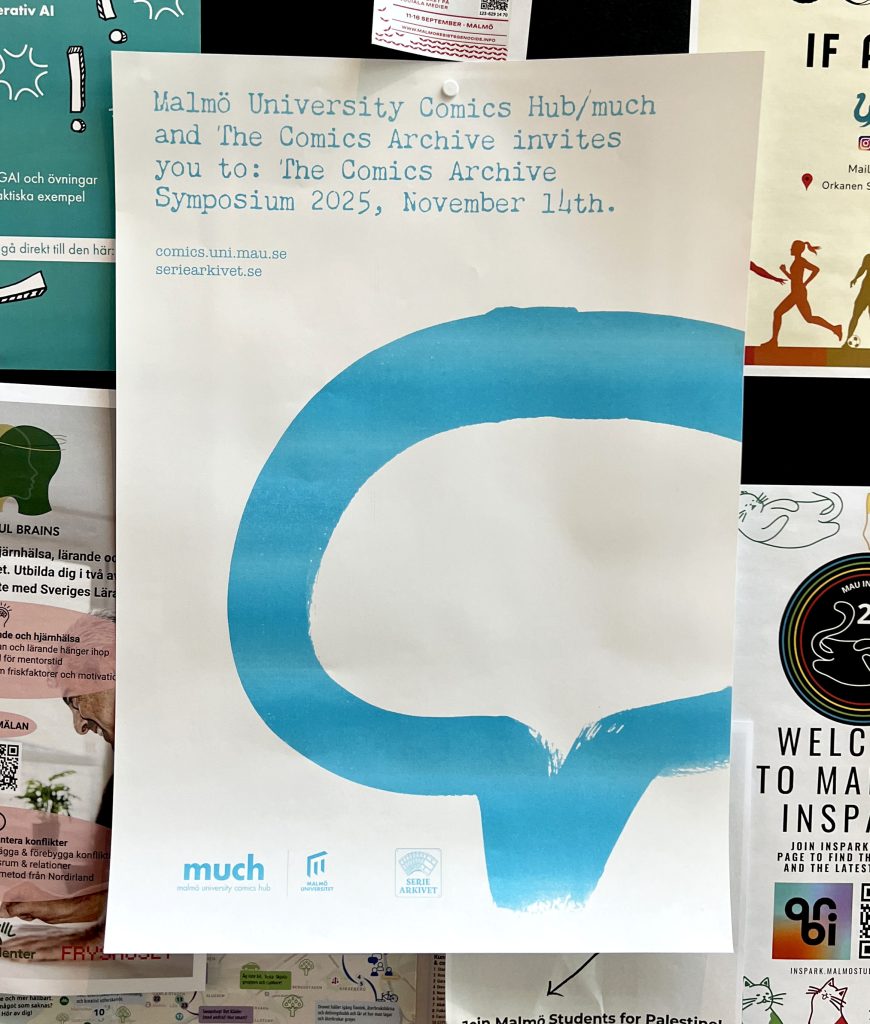
The Comics Archive in Malmö has expanded significantly in recent years through large donations. To provide a better overview and inspire scholars to initiate new projects, Malmö University Comics Hub/much and The Comics Archive invites you to a full-day symposium where we will present some of the most important additions. During this full-day symposium, comic scholars will also provide different perspectives on comics research and parts of the collections will be presented thematically. The goal is to inspire you to initiate new research with the starting point in the archive’s unique and largely unresearched collections.
The Symposium will be in the form of presentations and workshop, so there will be no call for papers.
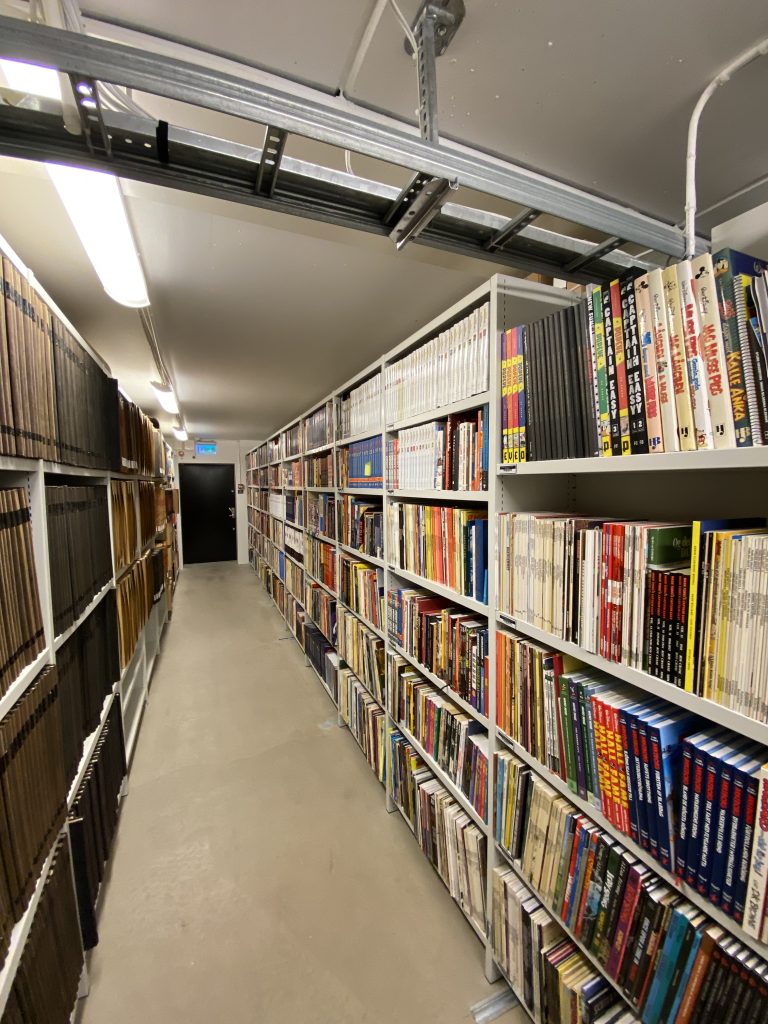
Target group: Comics-scholars and PhD-students.
Cost: Free.
Date: November 14, 2025.
Place: Malmö university, K3-Studio, Nordenskiöldsgatan 1 and The Comics Archive, Friisgaan 19b, Malmö.
Registration by mail (no later than November 10th): gunnar.krantz@mau.se